Every answer your idea needs, fast.Full innovation due diligence in 10 minutes.
Paseo runs a 360-degree analysis of your idea against 220 million patents and journal articles. Feasibility, market fit, competitive landscape, IP position. All in one report, in about 10 minutes. See where the open space is, test multiple ideas fast, and plan your roadmap before you invest a dollar.
Patents and journal articles analyzed
From idea description to full report
Dimensions of idea analysis per run
The bottleneck nobody talks about
You have an idea worth pursuing, and before you can move on it, you need answers. Is it feasible? Is it new? Who else is working on it? Where is the market? Who would buy or license it?
Getting those answers the traditional way means hiring a search firm, running manual literature reviews, and spending $15,000 or more. It takes weeks. Sometimes months. And the results are often narrow, covering one domain and returning a handful of references.
Meanwhile, your competitors are filing. Your window is closing. And you are still waiting on a report.
Paseo answers every one of those questions in about 10 minutes. One input. Sixteen dimensions of analysis. A complete picture of where your idea stands, including where the open space is so you can plan your next move. Run it again on your second idea. And your third. Test ten ideas in the time one traditional search used to take.
Whether you are filing a patent, raising a round, planning a product, or deciding which idea to pursue first, Paseo gives you the answers you need to move forward with confidence.
Three steps. Sixteen answers. Ten minutes.
Describe your idea
Type a plain-language description of your idea. A paragraph is enough. No special format, no keywords, no training.
Paseo runs the analysis
Paseo runs 16 dimensions of analysis across 220M+ patents and journal articles. Feasibility, novelty, market fit, competitive landscape, IP position, and more.
Read your report and act
You get a structured report covering feasibility, novelty, competitive landscape, market fit, draft claims, and more. Direct links to relevant prior art. A clear uniqueness verdict. And a map of where the open space is, so you know exactly where to focus.
Sixteen dimensions. One report.
Is your idea viable?
Feasibility Check
Flags ideas that violate physical laws or face fundamental technical barriers before you spend another dollar.
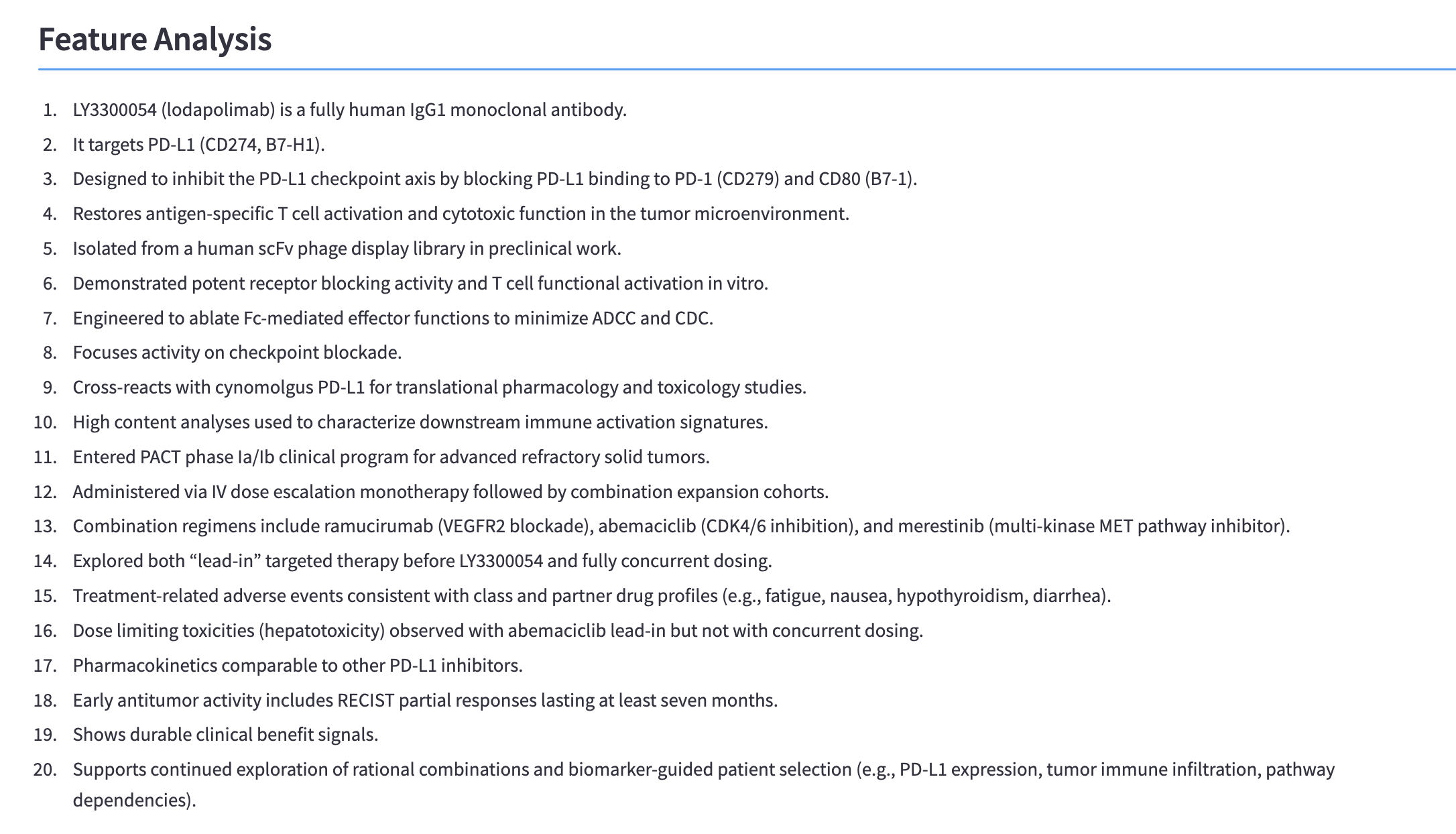
Feature Extraction
Pulls the core features of your invention from your description so you can verify nothing got missed.
Problem Analysis
Identifies the broader problems your invention addresses, so you can frame it correctly for investors, filings, or grant applications.
Is your idea actually new?
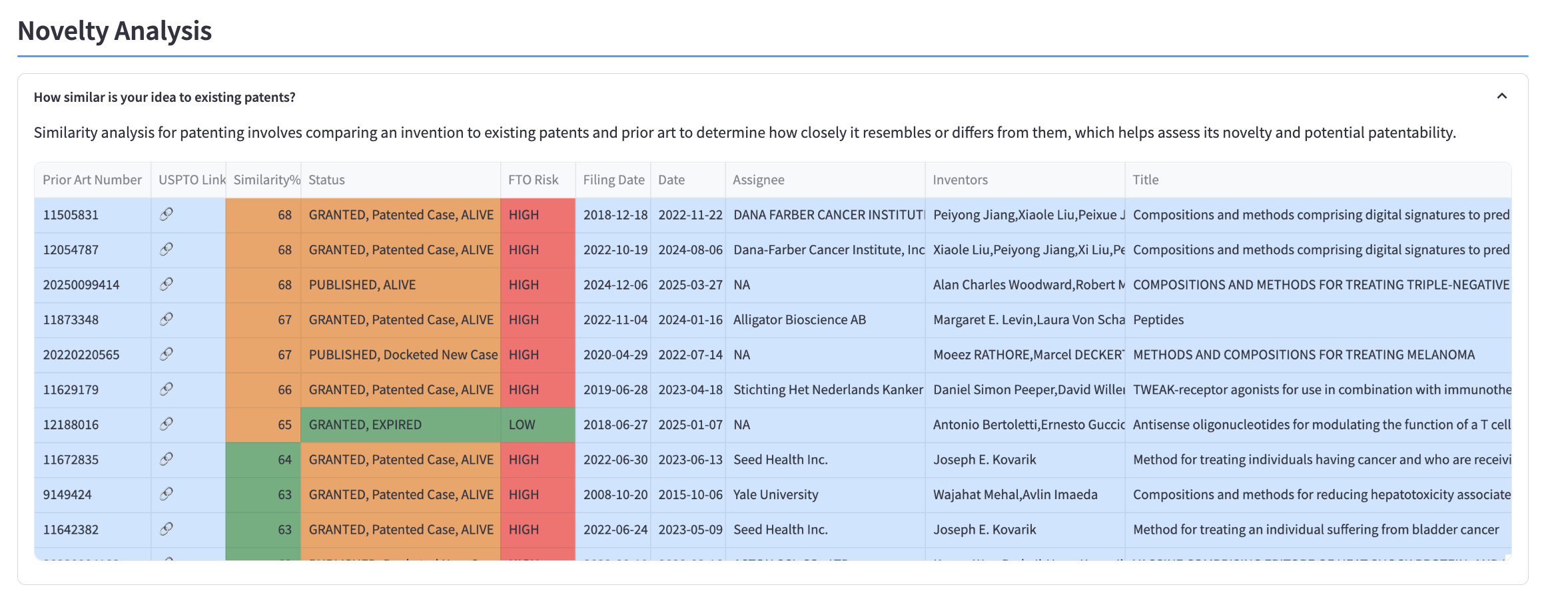
Novelty Analysis
Compares your description against the full USPTO patent database and ranks the most similar prior art by similarity score, with direct links to each patent.
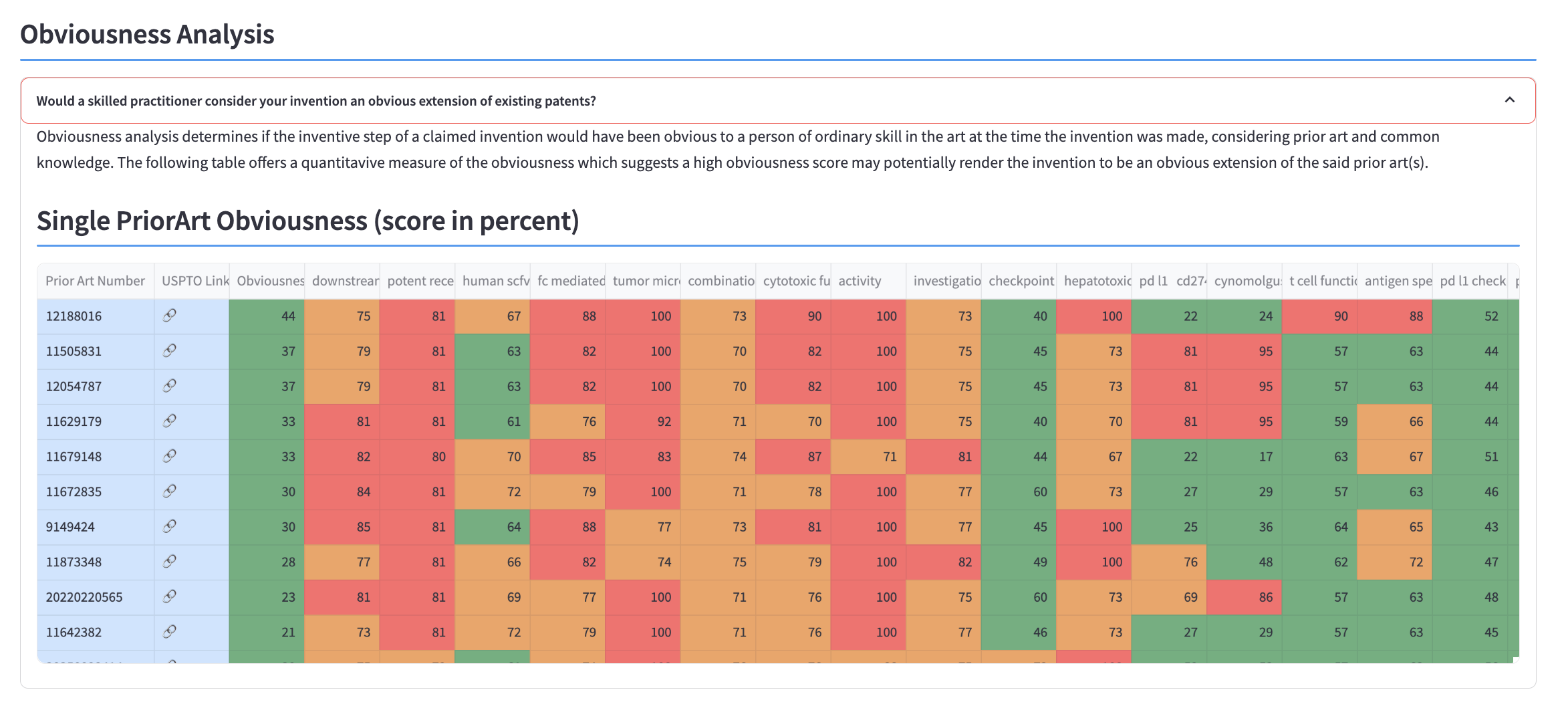
Obviousness Scoring
Measures how "obvious" your idea would seem to a practitioner, both for single features and multi-feature combinations. High obviousness means your idea is too close to what already exists.
Journal Paper Analysis
Scans 200M+ academic abstracts and flags published research similar to your idea, organized concept by concept.
Uniqueness Verdict
A final, clear call: is your idea unique enough to pursue, or does it need rework?
Where do you stand in the market?
Competitive Landscaping
Lists companies already working on similar ideas. Potential competitors, collaborators, licensees, or acquisition targets.
Geographic Market Analysis
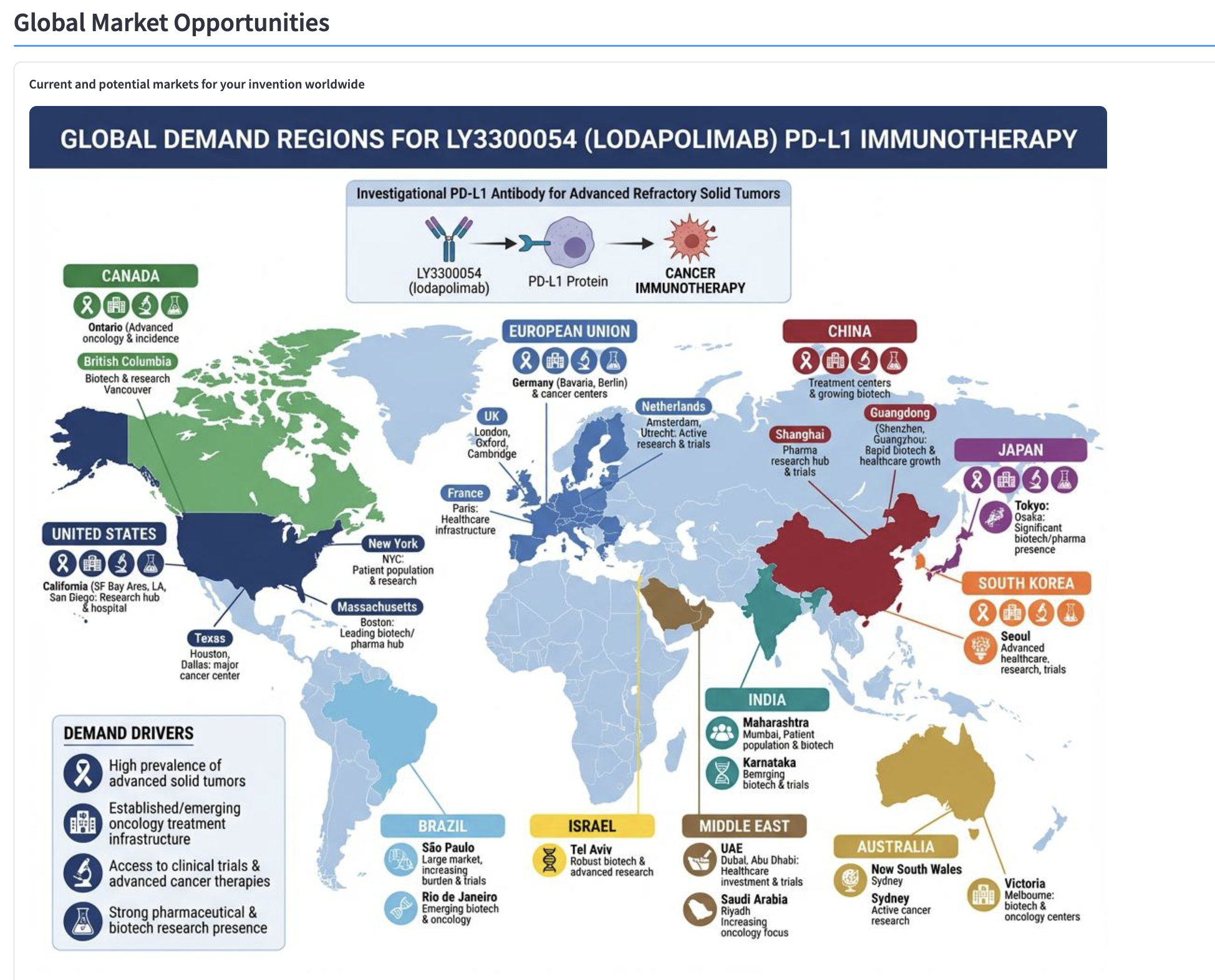
Identifies global regions where your product would likely find the strongest demand based on demographic and economic signals.
Technology & Industry Mapping
Surfaces industries and companies likely to license or acquire your IP.
What do you do next?
Whitespace Mapping
A color-coded matrix showing which of your features and concepts are already covered and where the open space is. Use it to rapidly iterate your idea toward the areas where it can stand out, before you commit resources to building.
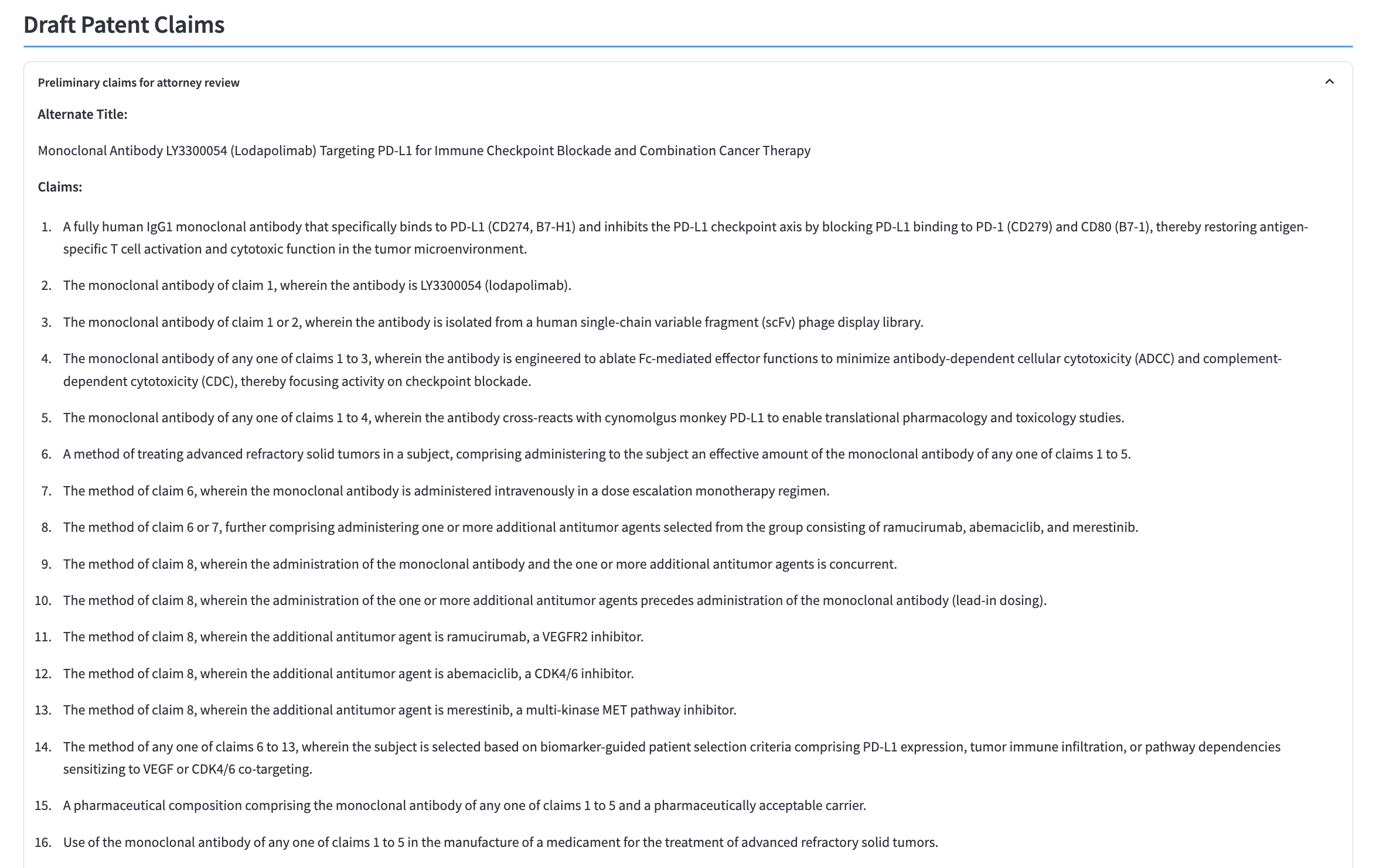
Draft Claims
Generates an initial set of patent claims based on your idea description. A concrete starting point for understanding what is protectable. Have an attorney review before filing.
CPC Classification
Maps your idea to the patent classification codes it falls under. Useful for understanding which technology domains your idea lives in and who the relevant players are.
Invention Disclosure Document
A structured first draft covering the idea description, its value, the problem it solves, current workarounds, and what your invention improves. Use it to brief an attorney, a co-founder, an investor, or a grant reviewer.
Potential Products & Services
Shows larger products or services that could use your invention as a component, broadening its commercial value.
See what a 360-degree report looks like
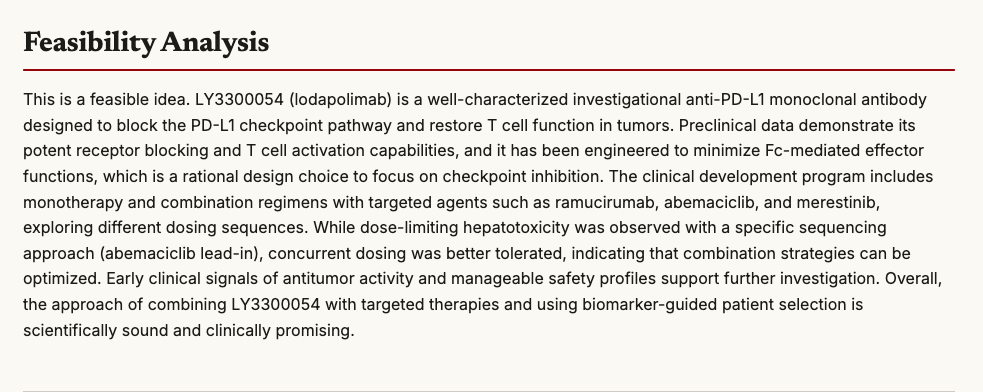
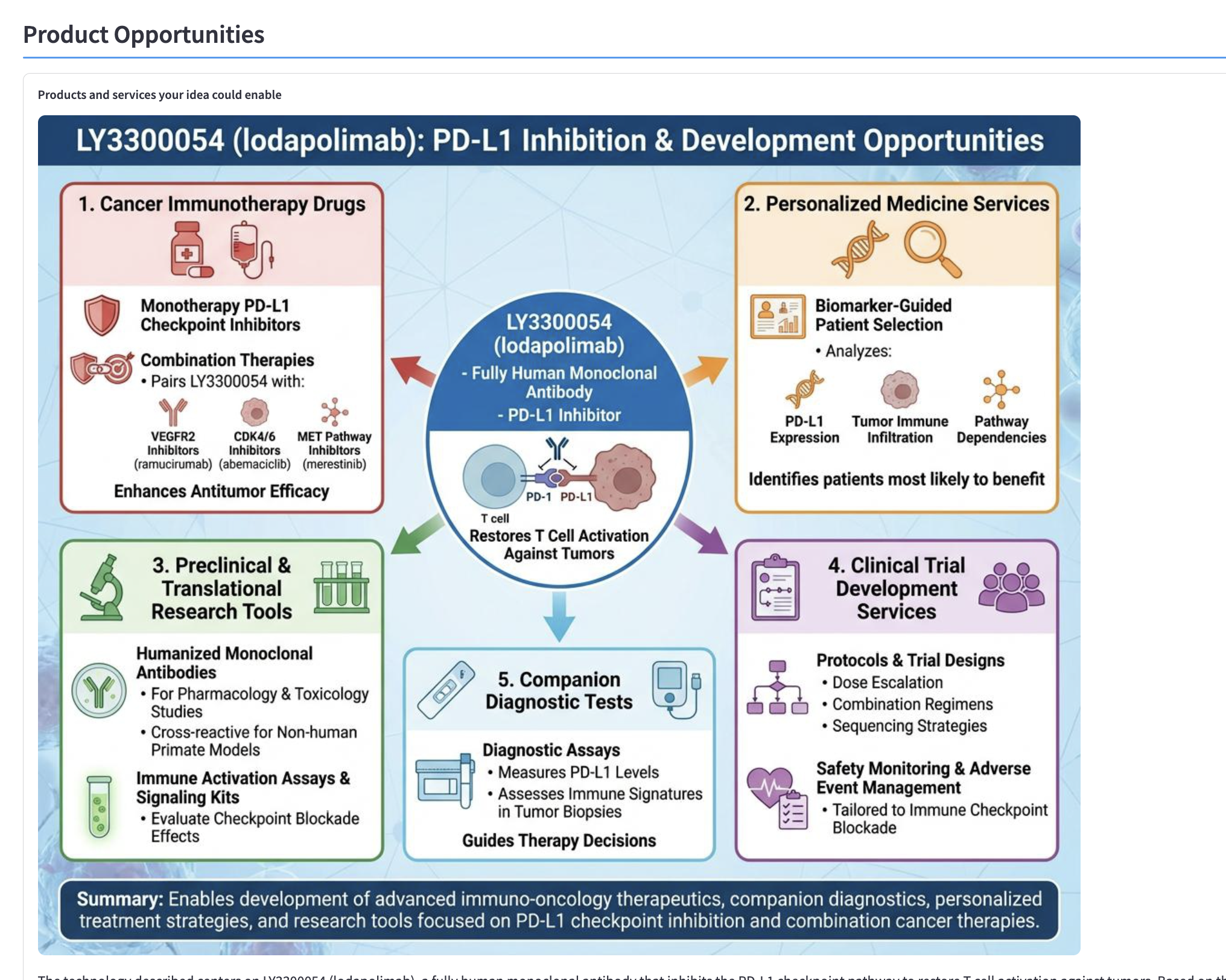
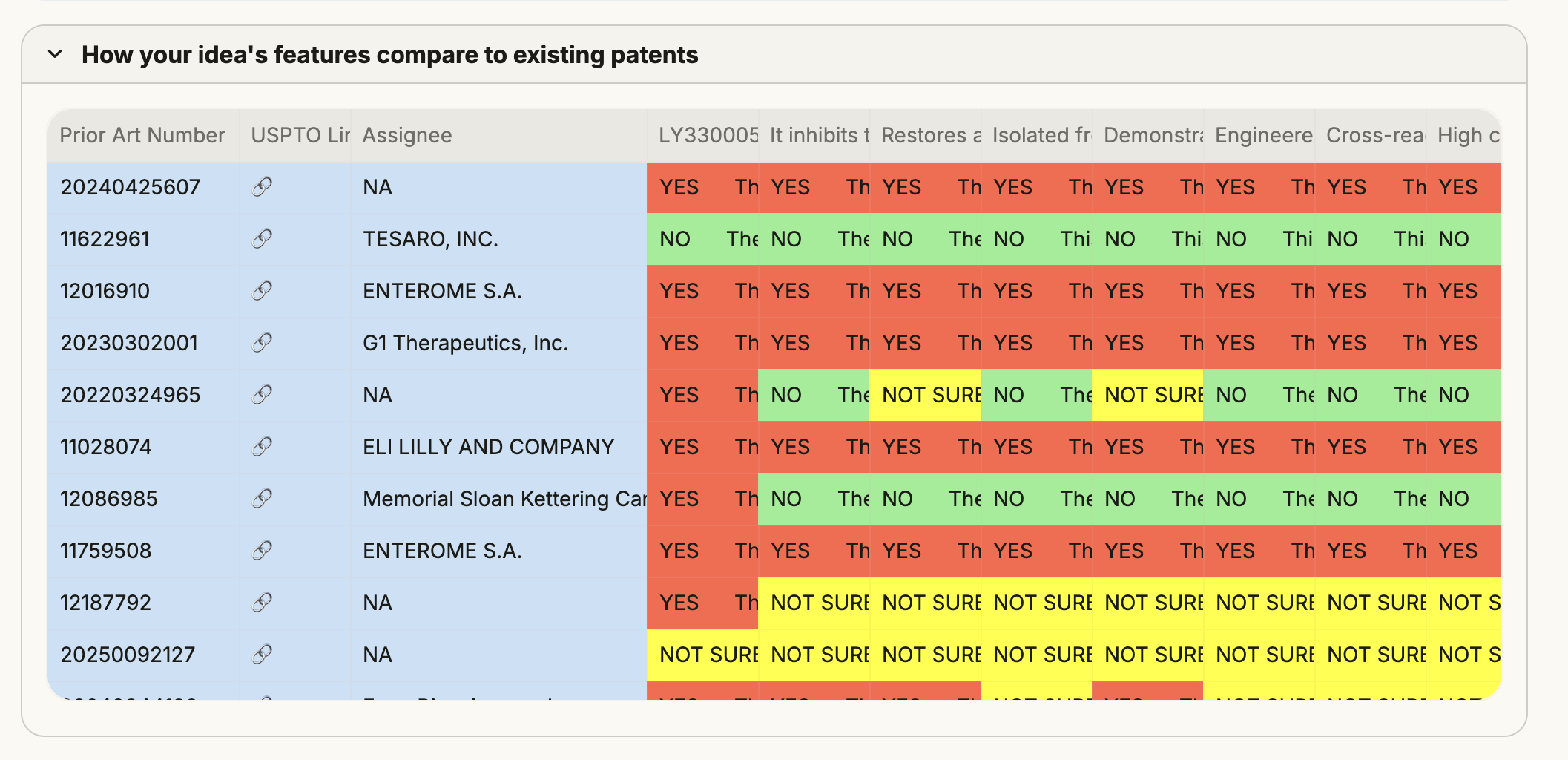
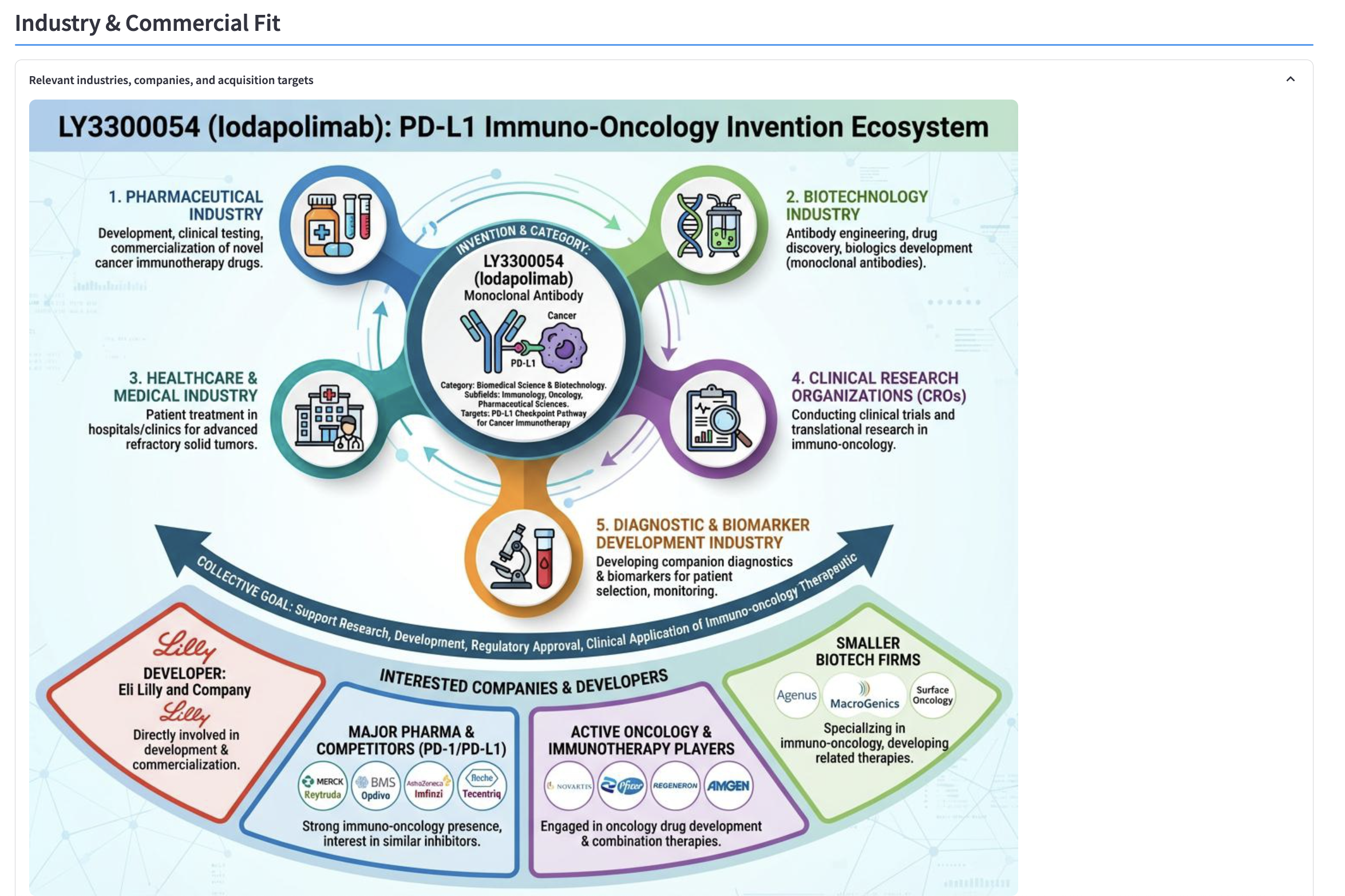
Feasibility Check: flags ideas that break physical laws or face fundamental technical barriers before any further analysis runs.
Two ways to start
Run your own idea through Paseo, or see the platform in action for your team.
Run your own idea
Bring your idea. We run it through Paseo together on a call, and you ask questions as the report builds.
- check_circleOne hour, live over Zoom or Google Meet
- check_circleYour idea run through the full Paseo analysis in real time
- check_circleDirect access to ask questions as results come in
- check_circleThe complete report and a recording, yours to keep
$99 for your first session·$399 for each one after
See it for your team
A guided walkthrough for R&D and IP teams. We'll run a sample idea through the full platform on a call, so you can see how Paseo fits your workflow before you bring your own.
Questions
One hour, live with you on the call.
A written or spoken description of your idea. The more specific, the better the analysis.
Yes, up to 24 hours before your slot through the confirmation email.
You'll land on a booking calendar to pick your slot. Your report and recording are sent afterward.
No. Your account is set up as part of the session, you don't need one to book.
We'll reach out within one business day to schedule a call and walk your team through the platform using a sample idea.
Your ideas stay yours
Paseo is SOC 2 Type I and Type II certified. All data is encrypted. Every customer account is fully isolated. We never train on your ideas or your data, and we offer a Zero Retention Mode that deletes your analysis data on demand. If your compliance team needs documentation, we have it.
Common questions
No. Paseo gives you the intelligence to make better decisions faster, regardless of where you are in the process. If you are filing, it helps you and your attorney come to the table better prepared. If you are not filing yet, it tells you whether your idea is worth pursuing, where the open space is, and who the relevant players are. The decisions you make after reading the report are still yours.
About 10 minutes from the time you submit your idea description. The analysis runs across 220M+ patents and journal articles and covers 16 separate dimensions.
The full U.S. patent database at the USPTO, plus over 200 million academic journal article abstracts. Results include direct links to each relevant patent or publication.
That's actually useful information. The Prior Art Landscape shows you exactly which features and concepts are already covered and which are open. You can use that to refine your idea, identify white space, or decide to pivot before spending money on a filing that's likely to get rejected.
Yes. Paseo is SOC 2 Type I and Type II certified. Your data is encrypted, your account is isolated from all other users, and we never train our models on customer ideas. We also offer Zero Retention Mode, which deletes your analysis data on demand.
Solo inventors testing whether an idea is worth pursuing. Startup founders validating their core technology before raising capital. Patent attorneys accelerating pre-filing research and delivering faster client work. In-house IP counsel running patentability and FTO checks. R&D teams screening ideas before committing lab time and budget. University researchers and TTOs evaluating disclosures, strengthening grant proposals, and identifying licensing opportunities. If you have an idea and need a fast, complete picture of where it stands, Paseo is built for you.
Yes. Every report can be downloaded as a PDF. You can also export the underlying data tables (Similarity, Obviousness, Feature Landscape) as spreadsheets.
A traditional prior art search is manual, expensive, and narrow. It covers one domain, returns a handful of references, and gives you a vague opinion on whether your idea might be patentable. That is it. Paseo runs 16 dimensions of analysis on your idea: feasibility, feature extraction, problem framing, market geography, competitive landscape, technology mapping, novelty, obviousness, journal coverage, prior art landscape, draft claims, CPC classification, invention disclosure, potential products, uniqueness verdict, and a plain-language summary. You get a decisive verdict, not a maybe. The report shows you where the open space is, so you can plan your development roadmap before committing resources. And because it runs in minutes, you can test multiple ideas and iterate fast.
Yes. The same NDA that covers your Paseo account applies to Live Analysis sessions. We don't disclose, copy, or file anything based on what you bring to the call.
From the Paseo team

What AI Will Never Conquer in IP Analysis
It’s still us, you and me.
Read morearrow_forward
Five Forces and Failed Trials: What Michael Porter Can Teach Modern Biotech
Not a paper on CRISPR. Not a pitch deck template. A book about competitive strategy written by a Harvard professor.
Read morearrow_forward
Porter's Playbook and the Patent Search: How AI in IP Finally Makes Competitive Strategy Operational
If you work anywhere near innovation or intellectual property, these forces are not theoretical. They're the water you swim in.
Read morearrow_forward